
May is Mental Health Awareness Month, a campaign that aims to educate the public, advocate for policies and bring greater awareness to mental health issues. Although the month is primarily observed in the United States, its mission reminds us that the stigmatization of mental health is one shared by many cultures. Everyone faces challenges in life that can impact their mental health, and now, more than ever, people around the world need support. For years, TechWomen fellows in Africa, Central and South Asia and the Middle East have been working in their communities to provide the tools needed to thrive, whether it is recovering from past trauma or dealing with emerging challenges. Here are spotlights on our alumnae’s efforts to improve their communities’ resiliency and eliminate the stigma surrounding issues of mental health.
Rania Bader, 2016 fellow of Jordan – Prioritizing mental health in the tech industry
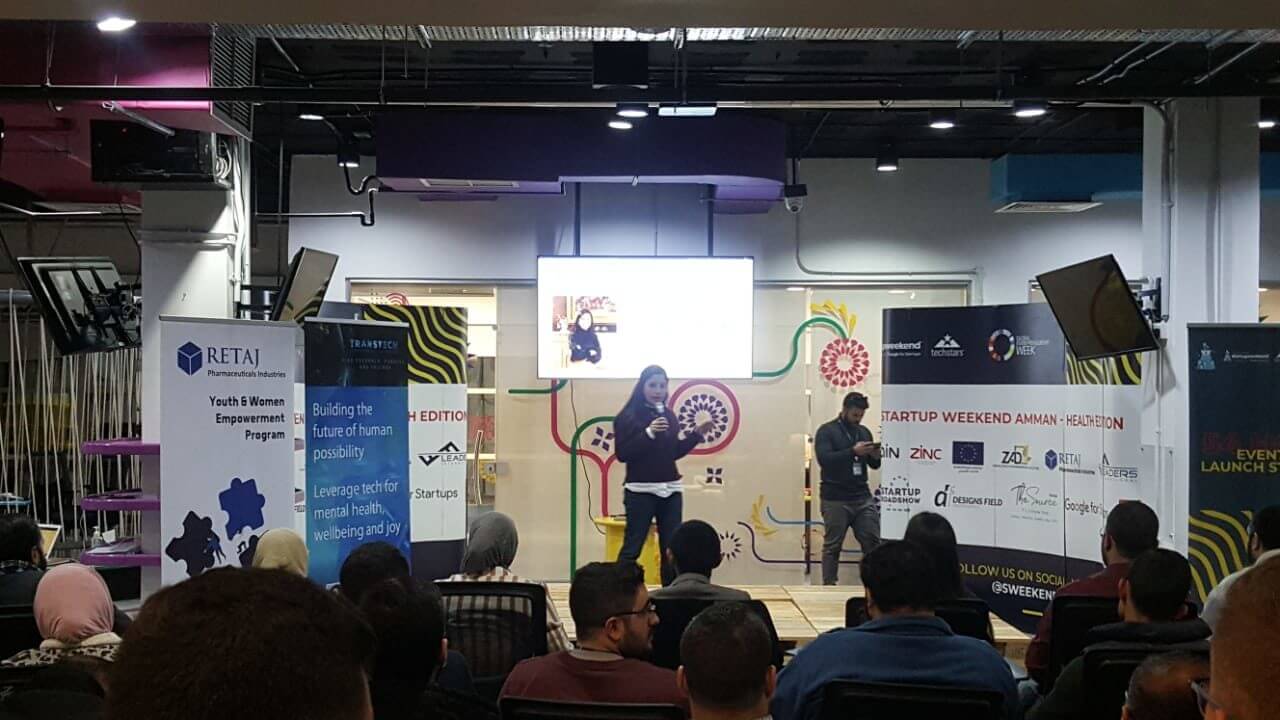
Rania introduces emerging technology for mental health, including sensor tech, AI, big data, neuro tech and bio tech to make her audiences aware that they can innovate and create solutions for mental health problems.
When Rania Bader was a Techwomen Emerging Leader, she connected with Cultural Mentor Ruby Yeh, who introduced her to Transformative Technology, an NGO based in Palo Alto that supports entrepreneurs and innovators who are leveraging technology for mental health, well-being and joy. Two years after the TechWomen program, Rania applied and graduated from Transformative Technology’s academy and later became the leader of the Transformative Technology Chapter in Amman, Jordan. She now works to support the community to create solutions that address mental health issues.
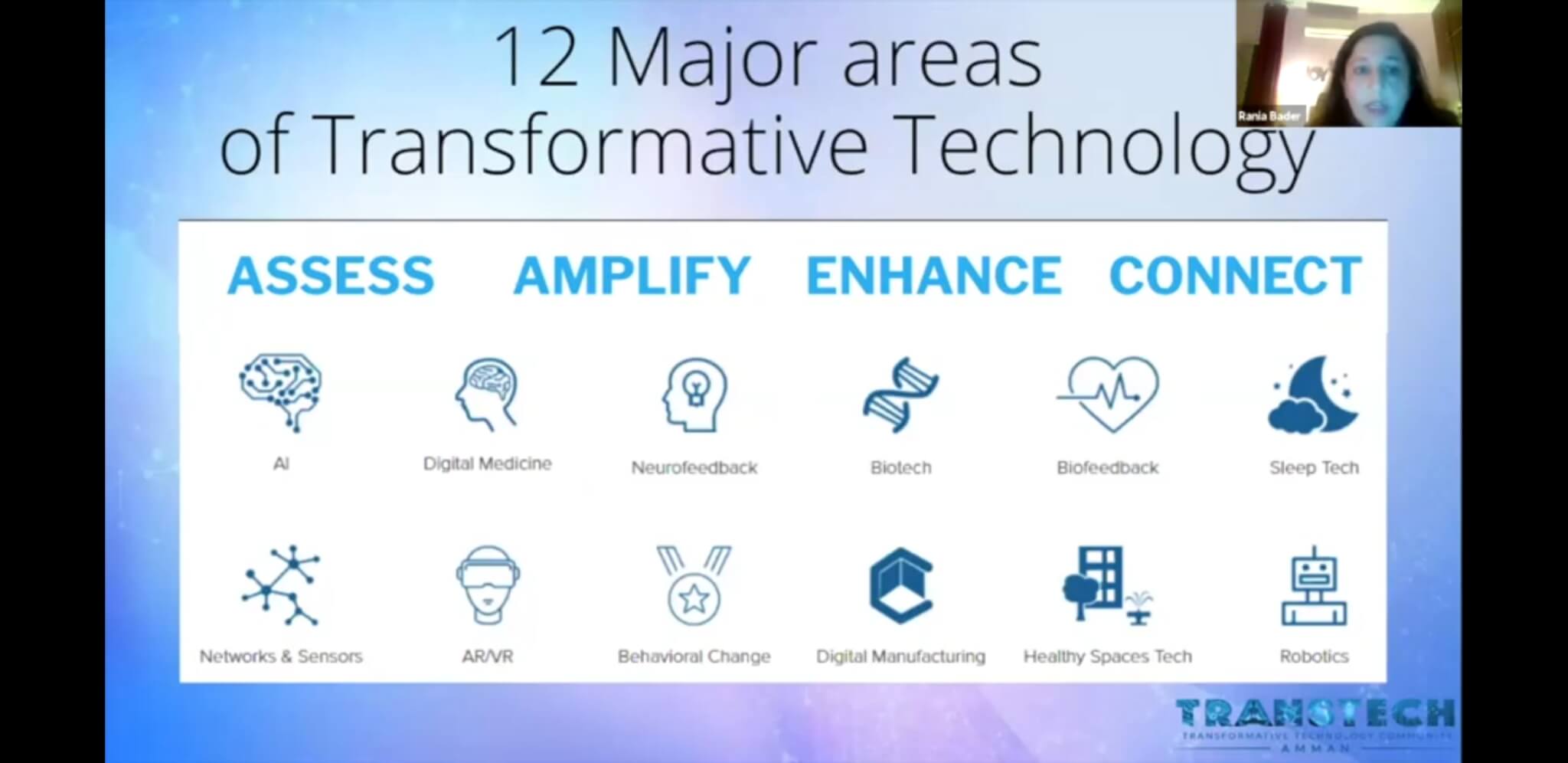 Recently, Rania delivered an online event for Transformative Technology in Amman, partnering with a startup that focuses on delivering scientific-based material to increase mental wellness. There, she spoke to Jordanian youth who showed a stronger interest in STEM when it was used to address topics like mental health. She hopes that by introducing mental health in more engaging ways, people will start to innovate at this intersection: “I found that now is the best time to address mental health through technology, as technology has the power to take a scarce thing and make it abundant and scalable and to accelerate the development of people, and reach bigger and bigger numbers,” she says. According to the McKinsey Global Institute, by 2030, 800 million jobs will be eliminated due to automation, and Rania believes that new jobs will be defined by human interaction, problem solving and creativity, for which social and emotional skills are essential and can be honed through the integration of mental health and technology.
Vanny Nicole Katabarwa, Pascale Mugwaneza, Christa Munezero, Noella Nibakuze, Solange Uwera and Lucie Uwizeye, 2018 fellows of Rwanda – Helping survivors find their voice to share their stories
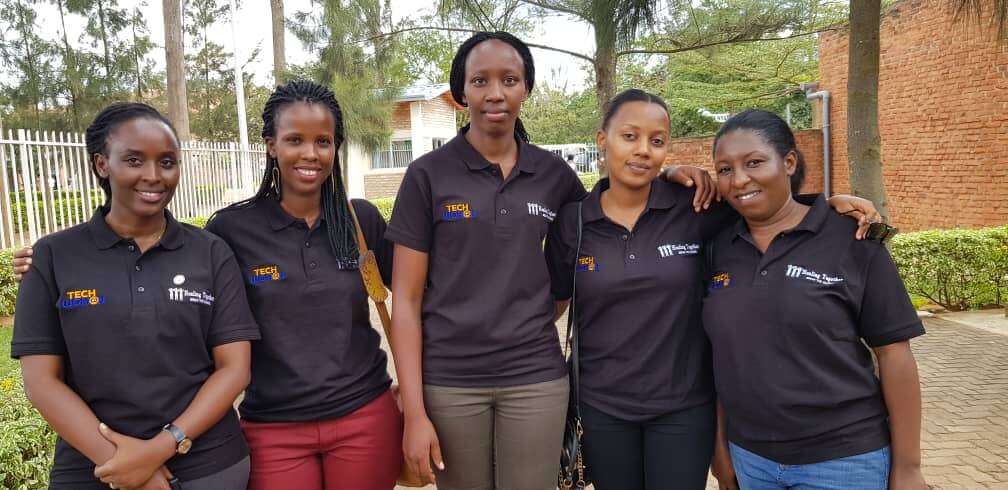
The Healing Together team worked with counselors to understand their challenges and identify the best way to build their capacity to support survivors and victims of trauma.
People who suffer from mental health issues often find it hard to find a space to safely begin their recovery. Many victims of the Genocide against the Tutsi in Rwanda suffered for years without finding the help they required, leaving many without a safe and trusted environment where they could express themselves, share their trauma and find healing. That is what motivated Vanny Nicole Katabarwa, Pascale Mugwaneza, Christa Munezero, Noella Nibakuze, Solange Uwera and Lucie Uwizeye to create the 2018 TechWomen seed grant-winning initiative, Healing Together, with the mission to enable an environment where women survivors can connect and share their experiences with a network of trained counselors and mentors.
Despite the setbacks of inadequate mental health services and policies, the fellows have made progress in working together with respected community leaders and building the capacity of counselors and therapists who then empower survivors to tell their stories. Through spending time with the women, Noella says that the fellows learned how to best support their needs: “What we have realized to be most helpful is breaking the silence: being able to talk about mental health and share your emotional wounds to either mental health professionals or other people who are able to help.” Through their work with Healing Together and being open with the younger generation about their experience, the survivors hope that further preventative mental health measures will be taken to lessen the stigma around mental health and ensure such atrocities will never happen again.
Zebo Isakova, 2019 fellow of Uzbekistan – Strengthening family bonds and maintaining community ties
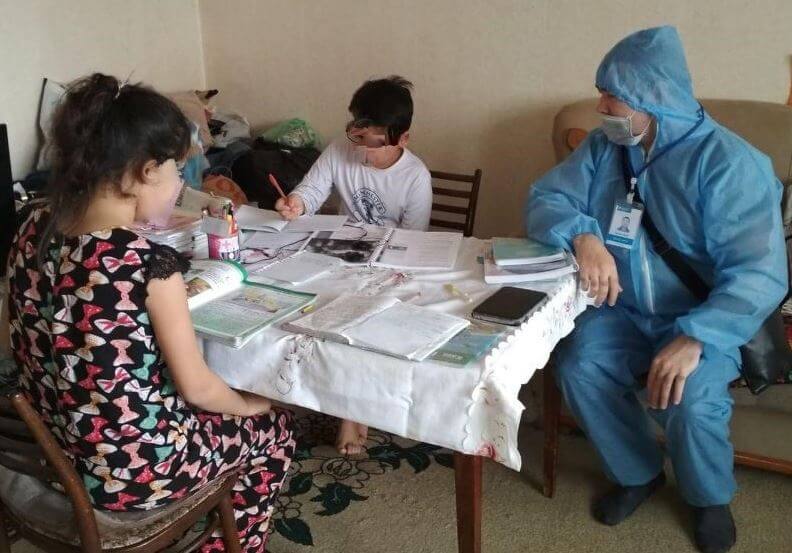
The Family Strengthening Service provides support for families who are struggling, including personalized tutoring, care packages and more.
According to Zebo Isakova, Uzbekistan has always been a country of strong family traditions. However, being in quarantine has recently put a strain on families, whether it is struggling to have income or have adequate time for their children. Through her work at an international NGO, Zebo began offering a Family Strengthening Service (FSS) that provides comprehensive assistance to families in difficult situations. The FSS has already helped 54 families by providing resources to educational, medical, psychological and financial assistance.
 Specialists from the FSS also examined the needs of vulnerable citizens, and found there was a significant need for psychological support. In response, Zebo started a Telegram channel called “Together We are Stronger,” where people can reach out to one another to reduce the feelings of isolation and loneliness in quarantine in a safe and free space. Currently, there are over 400 subscribers to the channel, and one user described it as “a piggy bank of techniques and methods for the prevention of emotional combustion and stress.” With feedback from subscribers, Zebo and her team learned the importance of having personalized support systems for people by connecting them to services and initiatives in their communities.
Reema Diab, 2019 fellow of Jordan – Empowering youth to build their own tools to thrive
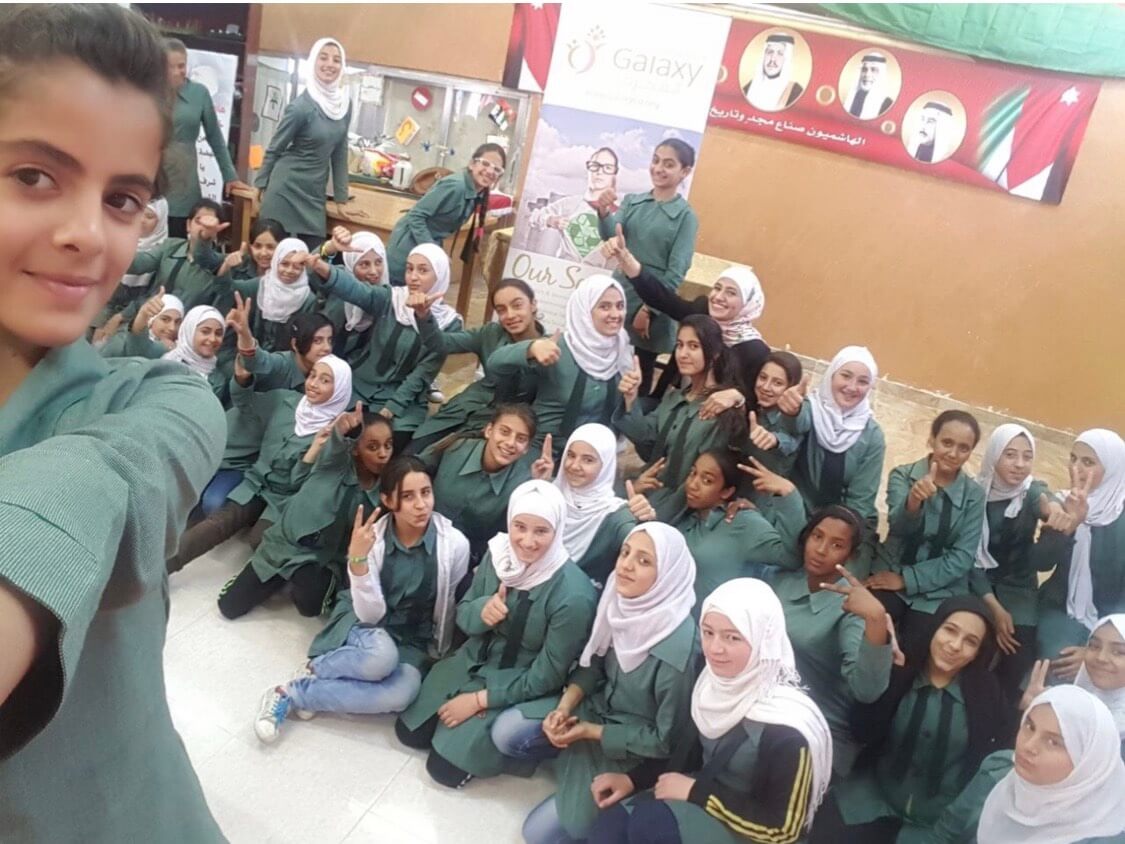
Reema hosts talks at universities and schools to encourage women and girls, and through her company Galaxy, provides resources to increase their digital literacy to empower them to learn marketable skills.
CEO and founder of Galaxy Reema Diab saw the gap between those who have access to technology and those who do not, and was driven to connect underserved communities with the digital skills they need. By giving vulnerable women and youth the skills they require to make a living, Galaxy aims to foster self-confidence and self-reliance. Galaxy also connects with children, youth, women and other marginalized groups to address topics such as bullying, cultural pressures and more. Her company collaborates across all levels of society, working alongside Jordan’s Ministry of Digital Economy and Entrepreneurship to change the public attitude towards mental health through talks and partnership outreach.
Reema built upon that foundation while working alongside 2019 fellows of Jordan Mais Muhtaseb and Hanan Khalil to create the SANAD project, which won a 2019 TechWomen seed grant. SANAD’S mission is to address the increasing need for mental health support for youth in Jordan, reaching high-risk youth through their mobile app and hosting workshops in school and universities to normalize the discussion around mental health. “Most people don’t think about what emotions they are dealing with but taking the time to really identify what you’re feeling can help you to better cope with challenging situations,” Reema says. “It’s okay to give yourself permission to feel.”
As Mental Health Awareness Month draws to a close, the efforts of TechWomen fellows to improve the mental health and well-being of their communities – no matter the time of year – will continue to deepen connections, transform innovation and create a brighter future for the next generation. In bettering their communities through their presence in schools, households, online and beyond, the fellows are embodying the TechWomen mission to empower the lives of people everywhere.

Speak Your Mind